

Keeping hives, gardening for wild bees, and being honest about both
At our 2026-2027 Season kick-off meeting I had the honor of presenting to our club my perspective as a beekeeper that is also interested in conservation of native bees. Below an article with my perspective.
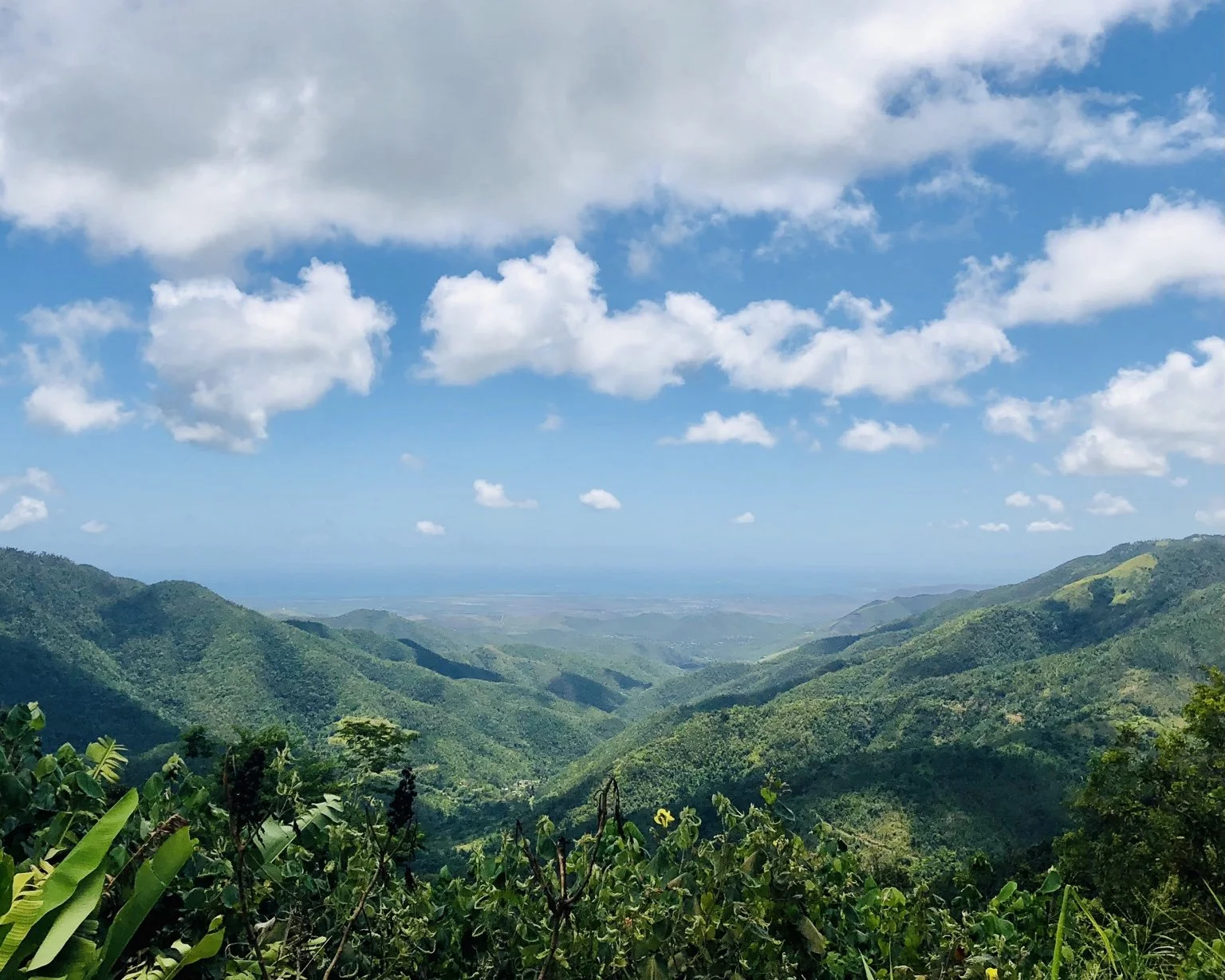
The mountains of Jájome Alto, Puerto Rico, where I grew up. Photograph by Angel Maldonado López.
I am a cancer biologist by profession, but at home I am a beekeeper and gardener. I grew up in the countryside of Jájome Alto, Puerto Rico, where plants, animals, weather and the land were part of everyday life. Today, my husband Leonard and I are building a small homestead in Littleton called Caribe & North: Caribbean roots meeting northern soil.
The honey bees are a big part of it.
My first colony lives in a Flow Hive called Papa Bear’s Honey. I spent much of its first winter checking temperature sensors the way some people check the weather. When I opened the hive in spring and found my marked queen walking across a frame surrounded by fresh eggs, I stood there grinning as though I had personally laid them.
I love these bees. That is also why I have had to become more honest about what they are.
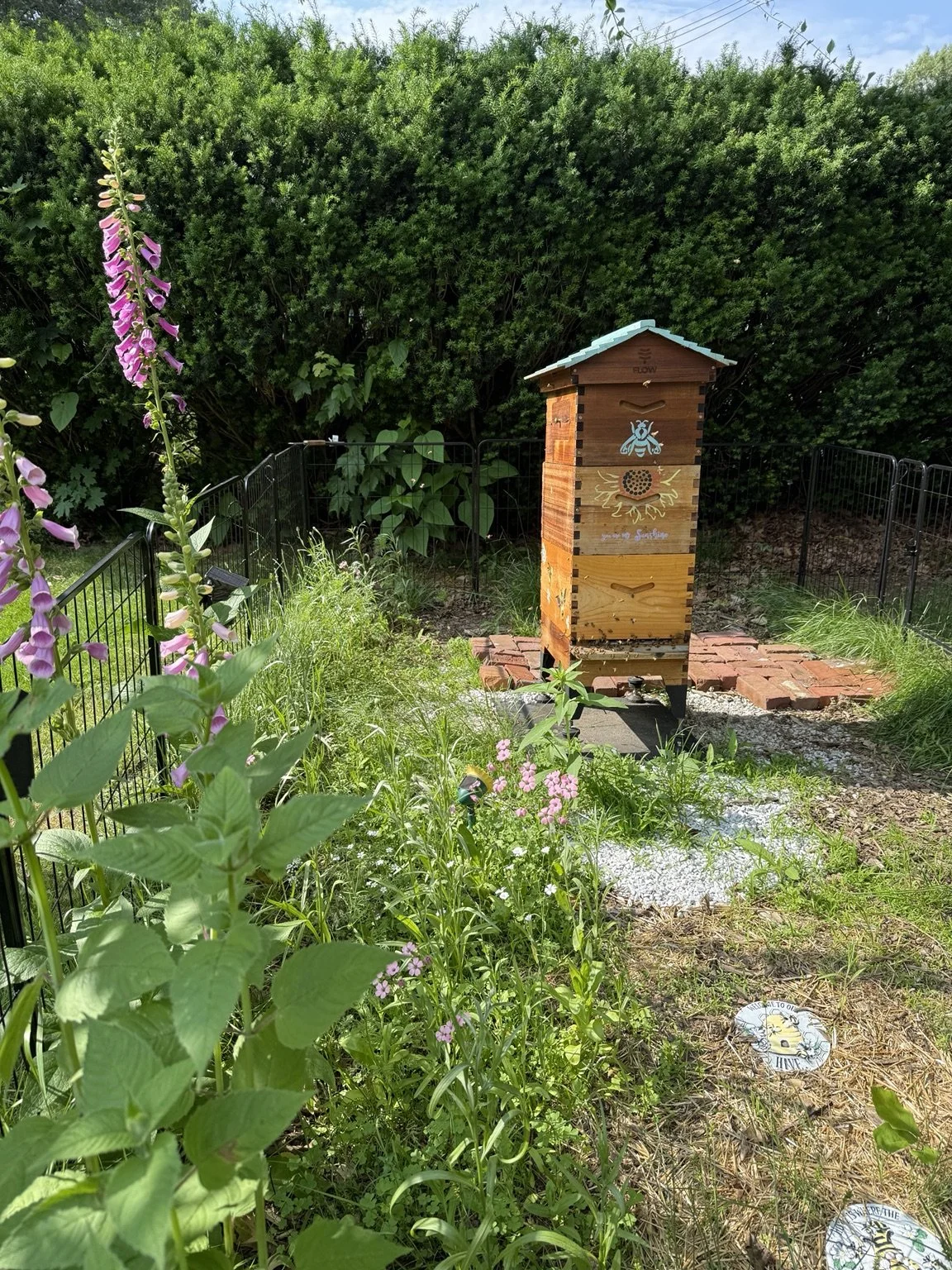
Angel’s first hive in the garden at Caribe & North. Photograph by Angel Maldonado López.
The bee I keep is not the bee that needs saving
Honey bees are remarkable animals, but they are not endangered in North America. They are managed livestock. We breed them, feed them, treat them for disease, divide their colonies and replace queens when necessary. They produce honey and wax, and they pollinate agricultural crops.
Wild bees are a different story.
Massachusetts has 390 verified bee species. Only one is the European honey bee. The other 389 include bumble bees, mining bees, mason bees, leafcutters, sweat bees and many others that most of us rarely notice.
Some are smaller than a grain of rice. Some are metallic green. Others are so densely covered in hair that they look upholstered. Most do not make honey or live in colonies. A typical solitary female builds her own nest, collects pollen, provisions a small cell, lays an egg and seals it. She may repeat that process only fifteen or twenty times during her short adult life. Her daughters will emerge the following year and begin the cycle again.
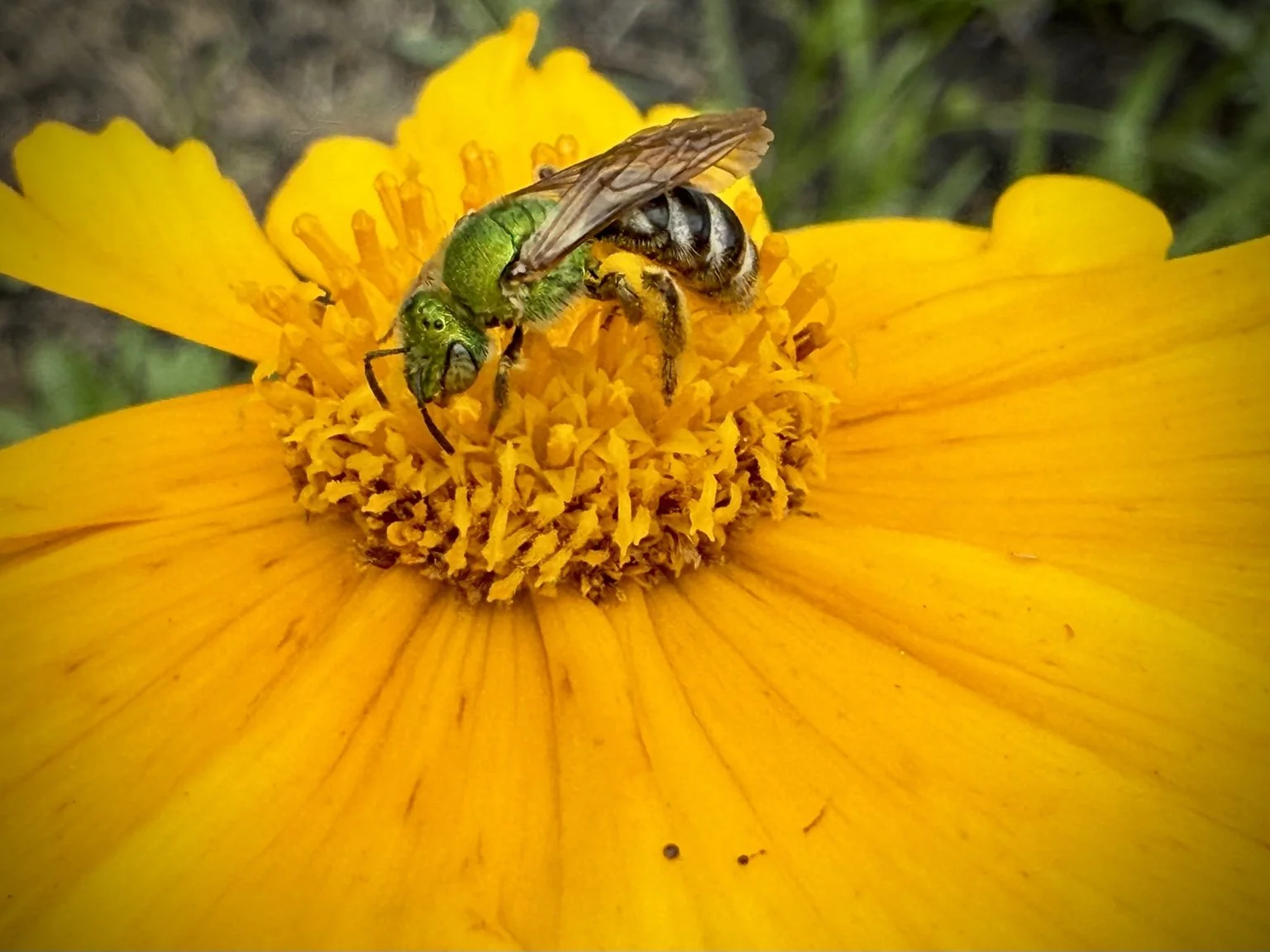
A metallic green native sweat bee (Agapostemon virescens) visiting a flower in my garden. Photo by Angel Maldonado Lopez
About 71 percent of Massachusetts bee species nest in the ground. They need bare, sunny, undisturbed soil. Another group uses hollow stems, beetle holes and cavities in old wood. Only a small percentage lives in hives, yet hives receive nearly all our attention.
Our idea of a finished garden can be a housing crisis for bees. Mulch, landscape fabric, dense groundcovers and closely mown lawns may leave almost nowhere for a ground-nesting bee to reproduce.
Some bees cannot simply use another flower
Massachusetts has 88 pollen-specialist bee species. Their offspring can develop only on pollen from a particular plant family, and sometimes from a single genus.
Macropis bees, for example, have a specialized relationship with loosestrife plants. Other bees depend on violets, evening primroses, sunflowers or asters. A garden may look lush and colorful to us while offering almost nothing to a bee whose required plant is missing.
That realization changed how I buy plants. I still grow flowers simply because I love them. A garden does not have to become an ecological spreadsheet. But I no longer assume that every flower is equally useful. Sometimes a beautiful flower is decoration. That is fine. I simply do not count it as habitat.
Two miles versus 120 meters
The difference in scale between honey bees and small native bees may be the most important thing I have learned.
A strong summer honey-bee colony can contain tens of thousands of workers. Those bees routinely forage about two miles from the hive, covering roughly 8,000 acres.
Studies of small solitary female bees have recorded average foraging distances of about 73 to 121 meters. For one of those bees, a football field and a half may contain her entire food supply.
My honey bees can leave my property. A small mining bee born beside one of my garden beds may not be able to.
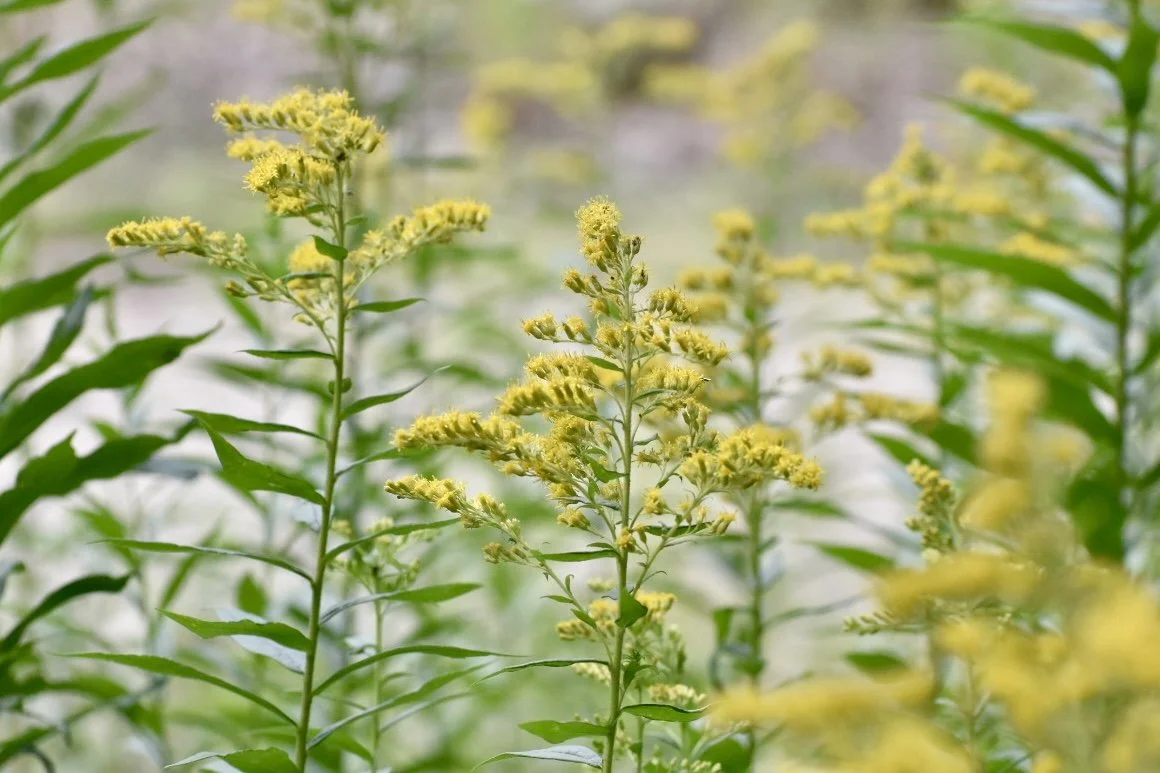
A goldenrod field is easy for a honey-bee colony to find, but it may be beyond a small bee’s range. Photo by Angel Maldonado Lopez
There is a large goldenrod field near my home. When I first inventoried my garden, I assumed goldenrod was already covered. My honey bees can find that field easily. A mining bee working within a hundred meters of her nest may never reach it. From her perspective, that field might as well be in another county.
Habitat only counts when the animal can reach it.
Honey bees and wild bees share more than flowers
The relationship between managed honey bees and wild bees is complicated. Researchers continue to study how much competition occurs and under what conditions. A hive does not automatically empty every garden around it, but tens of thousands of honey bees clearly place a large demand on local pollen and nectar.
Disease transmission concerns me even more.
Honey-bee viruses can be deposited on flowers and picked up by wild bees. Varroa mites amplify viruses inside honey-bee colonies. When a heavily infested colony collapses, neighboring bees may rob it and carry pathogens back across the landscape.
That means mite management is not merely a private matter between a beekeeper and a hive. Good beekeeping is part of community health.
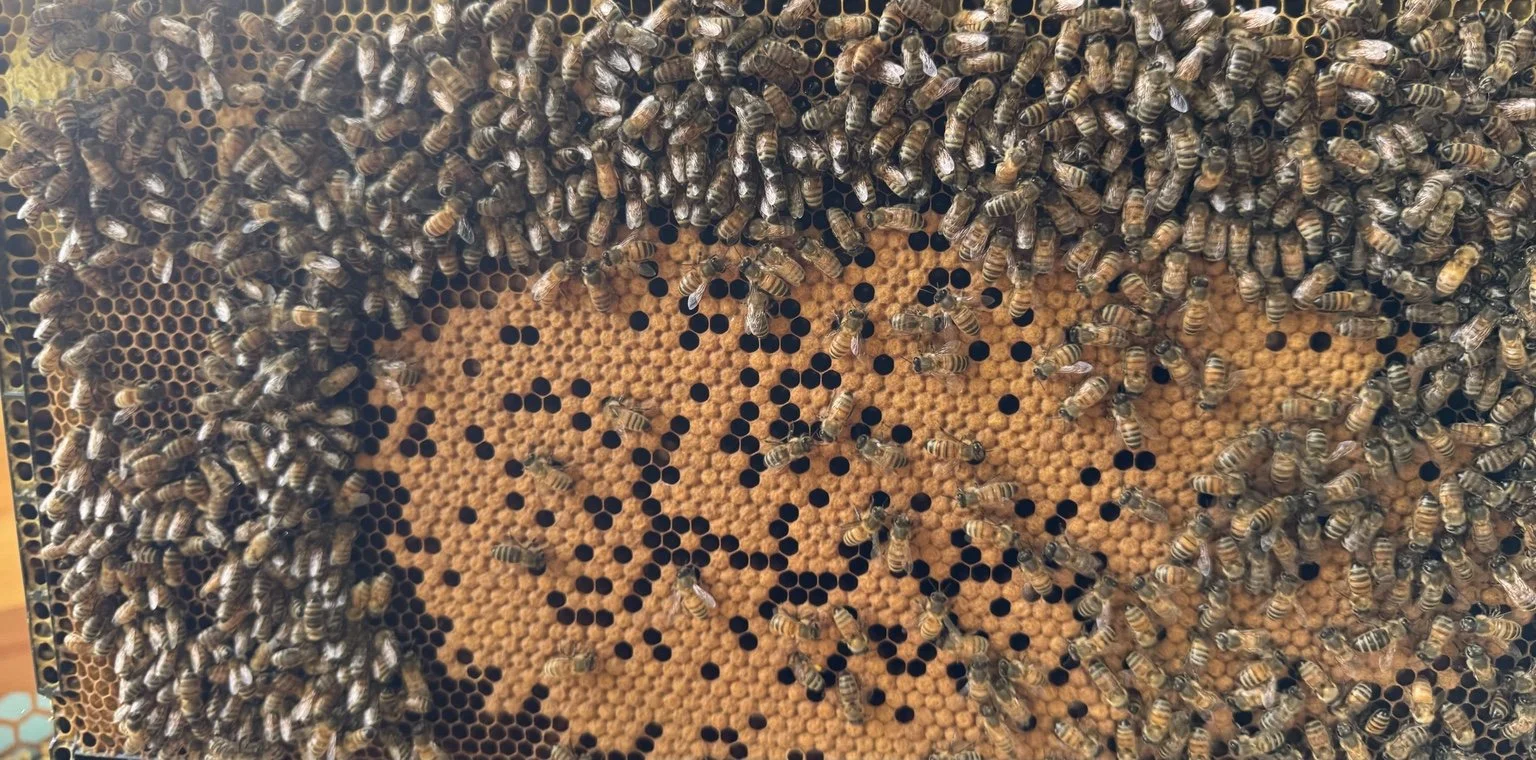
A brood frame from one of my colonies. Managing Varroa mites protects the hive and reduces its potential to amplify viruses. Photo by Angel Maldonado Lopez
There is also the question of whether a honey bee can perform the pollination job a particular plant needs. Honey bees cannot buzz pollinate. Bumble bees and several other native bees grip a flower and vibrate their flight muscles, shaking pollen from tubular anthers.
That behavior is especially important for tomatoes, blueberries, cranberries and eggplants. A honey bee may visit the same flower, but she cannot perform the same physical task. Pollination is not one interchangeable service.
Why I still keep honey bees
After learning all this, I did not give up beekeeping.
I keep bees because I like honey. That is an honest answer. Beekeeping is agriculture, and agriculture can be a decent use of land when it is done responsibly.
The hive has also made me a better observer. I notice when the maples begin producing pollen, how long the black locust bloom lasts and what a dry August does to available forage. Before keeping bees, I looked at my garden. Now I read it.
The hive is also a doorway. People ask me about honey bees. Almost nobody begins a conversation by asking about a ground-nesting Andrena. Once people are interested in the hive, I can introduce them to the other 389 species.
Keeping honey bees is livestock husbandry. Gardening for native bees is conservation.
Both can happen in the same yard. The mistake is allowing the first activity to count as the second. My hive is my hobby and a small agricultural project. My garden is where the conservation work happens.
What gardeners can do
The best place to begin is with plants that support many specialist bees. In our region, the most valuable genera include sunflowers, goldenrods, asters, Rudbeckia, Coreopsis, willows and blueberries.
Notice the seasonal pattern. Willows and blueberries provide early pollen. Goldenrods, asters and other native composites carry bees through late summer and fall, when many ornamental gardens begin running out of flowers.
And no, goldenrod does not cause hay fever. Ragweed blooms at the same time and has been letting goldenrod take the blame for generations.
Aim to have at least three kinds of plants flowering throughout the growing season. Walk through the garden once a month and write down what is actually blooming. Many of us discover a shortage in early spring and another gap between late summer and frost.
Nesting habitat matters just as much as flowers. Leave a few sunny patches of bare soil. Cut some perennial stems to fifteen or eighteen inches instead of cutting everything to the ground. Allow some leaves to remain beneath shrubs and in less formal areas. Wait long enough in spring for overwintering insects to emerge.
When buying plants, choose single or lightly doubled flowers when possible. Dense double flowers often replace pollen-bearing structures with extra petals. Ask nurseries whether plants were treated with neonicotinoids or other systemic insecticides. A plant marketed as pollinator friendly is not necessarily free from insecticides.
Beekeepers carry additional responsibilities. Manage Varroa mites. Avoid keeping more colonies than the surrounding forage and your inspection schedule can support. Think carefully before placing multiple hives near conserved habitat or known populations of vulnerable bees. Feed hungry colonies when necessary, but avoid open feeders that encourage robbing and disease exchange.
Two healthy, carefully managed colonies are better neighbors than six neglected ones.
Plant for the one that cannot leave
My honey bees can travel across thousands of acres. Whatever I plant in my yard will be only a small part of their diet.
A mining bee emerging from bare ground beside my garden may experience the same yard very differently. If I cover her nest with mulch, remove every hollow stem and fail to grow the flower she needs during her brief adult life, she will not relocate to a better neighborhood.
She simply will not happen.
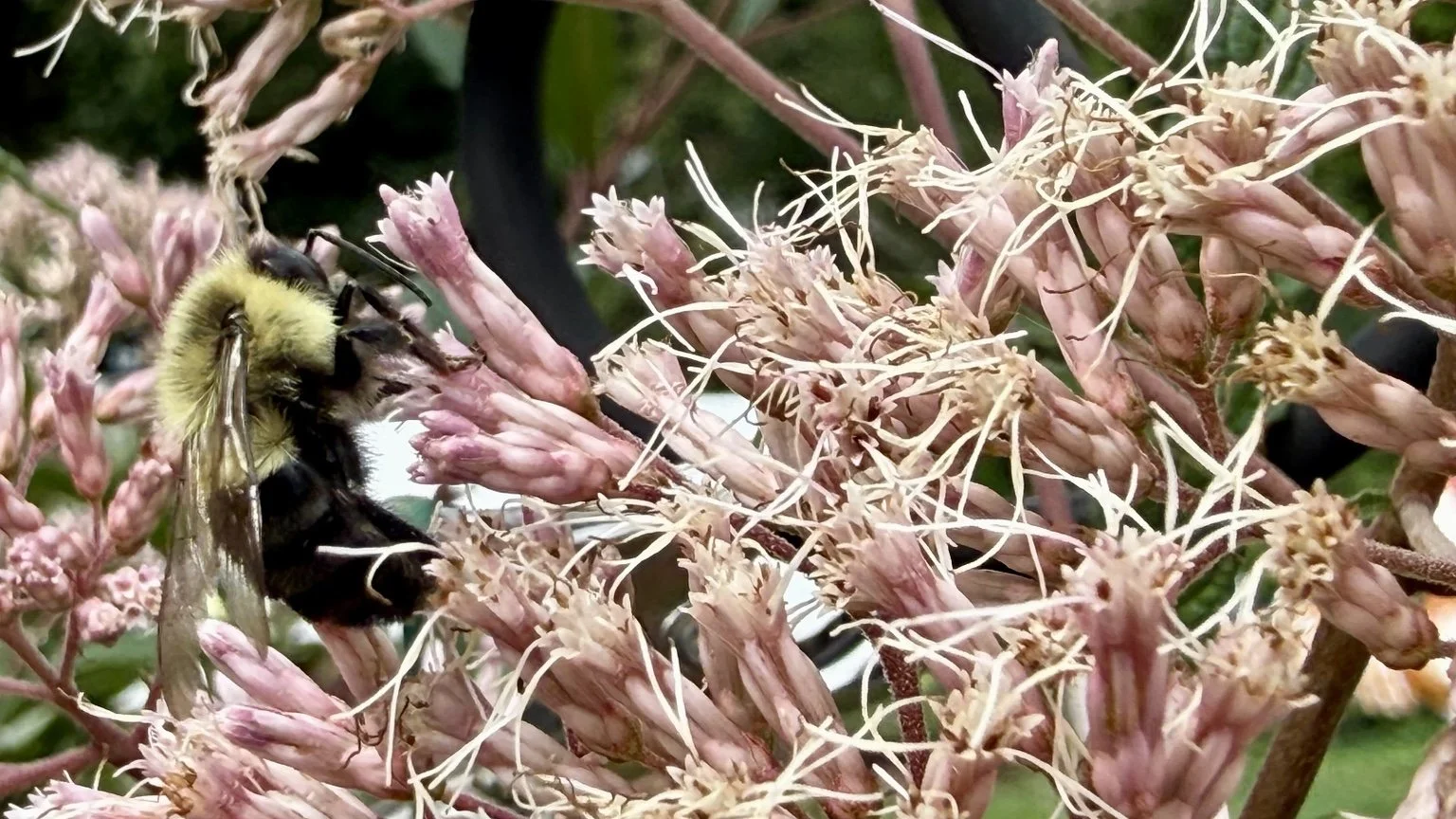
A bumble bee foraging among late-season flowers at Caribe & North. Photograph by Angel Maldonado López.
So I will continue keeping honey bees. I will enjoy the honey, watch the colony and manage the hive as responsibly as I can. But I will not pretend that owning honey bees is, by itself, an act of conservation.
For the wild bees, the most meaningful work begins outside the hive.
Plant for the one that cannot leave.
About the author Angel Maldonado López is a cancer biologist, beekeeper and gardener. He and his husband Leonard created Caribe & North, their Littleton homestead, where Caribbean roots meet northern soil.
Selected sources
• Veit, M. F., et al. A Checklist of the Bees of Massachusetts. Journal of the Kansas Entomological Society, 2021.
• Massachusetts Division of Fisheries and Wildlife. Bumble bee conservation guidance.
• Cane, J. H., and Tepedino, V. J. Gauging the Effect of Honey Bee Pollen Collection on Native Bee Communities. Conservation Letters, 2017.
• Alger, S. A., et al. RNA Virus Spillover from Managed Honeybees to Wild Bumblebees. PLOS ONE, 2019.
• Hofmann, M. M., et al. Solitary bee foraging distances. Journal of Hymenoptera Research, 2020.
• Danforth Lab, Cornell University. Creating a Pollinator Garden for Specialist Bees.
• National Wildlife Federation. Keystone Plants for Eastern Temperate Forests.
• Xerces Society. Why Getting a Hive Won’t Save the Bees.
