

A better way to prepare vegetable beds for winter
By the Littleton Country Gardeners Horticulture Committee
As the vegetable garden begins to wind down, there’s a temptation to think the season is simply over: pull everything out, rake the beds clean, and come back in spring.
But fall is actually one of the best times to improve the garden.
What we do with our vegetable beds now can protect soil through a New England winter, reduce disease problems next year, conserve nutrients, and make spring planting considerably easier. The goal isn’t necessarily a perfectly tidy garden. It’s to leave the soil protected and the garden ready for another growing season.
Start with a thoughtful cleanup
Begin by harvesting whatever is left and removing spent vegetable plants, fallen fruit, and other material that could harbor disease.
There is an important distinction here: not every dead plant needs to go.
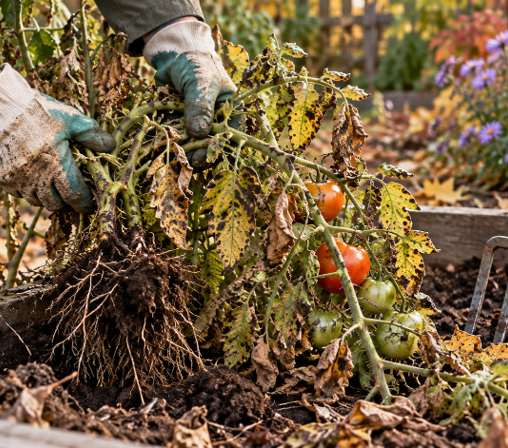
Healthy plant material can usually be composted, especially if you maintain a well-managed compost pile. But visibly diseased vegetable plants deserve more caution. Tomato foliage showing diseases such as early blight or Septoria leaf spot, for example, is better removed rather than left lying in the bed where infected debris can contribute to disease pressure the following year.
This is one place where vegetable gardens differ somewhat from perennial and pollinator gardens. Leaving stems, leaves, and seedheads in ornamental beds can provide valuable overwintering habitat for insects and food for birds. In a vegetable bed, however, crop residue associated with disease is something we generally don't want to preserve.
So clean selectively rather than automatically.
Whatever you do, don't leave the soil naked
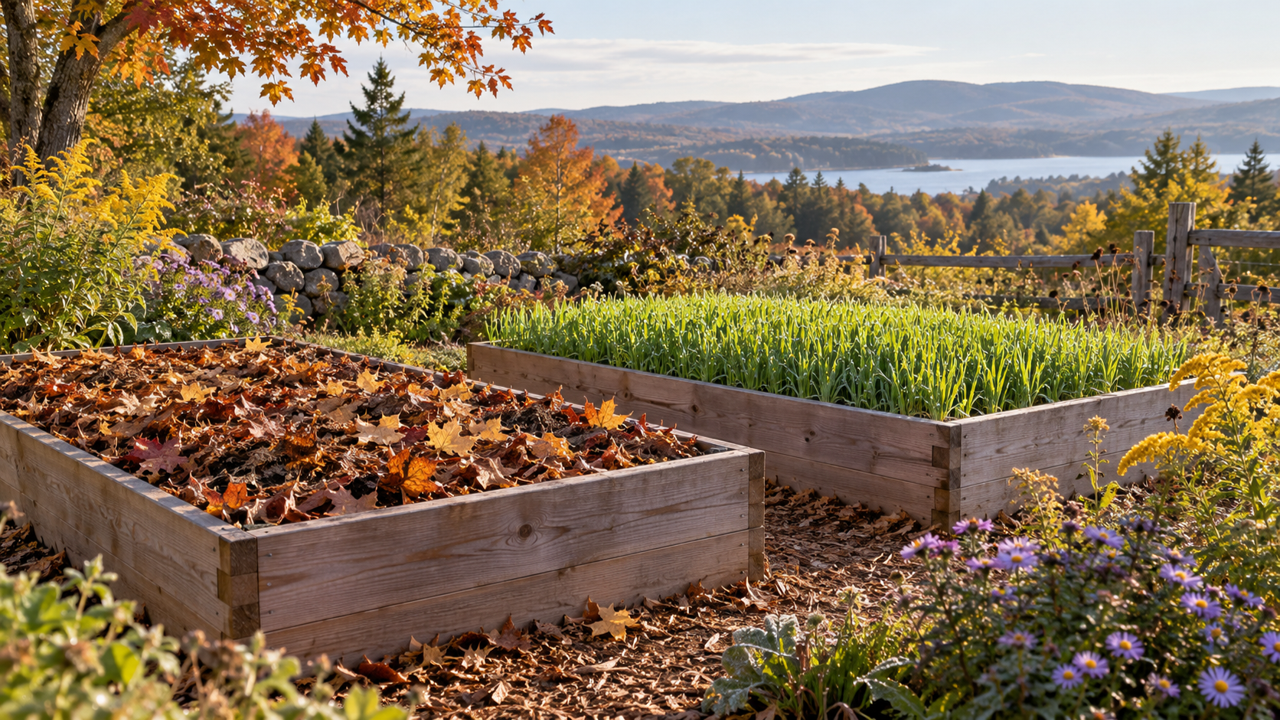
Once the vegetables are gone, one of the most important things you can do is cover the soil.
Bare soil is vulnerable to erosion, compaction from rain and snow, nutrient loss, and the gradual deterioration of soil structure. Nature rarely leaves healthy soil completely uncovered, and our gardens benefit from following the same principle.
There are two basic approaches: grow something or cover the bed with something.
A living cover crop is especially useful because its roots hold soil in place and capture nutrients that might otherwise be lost during the off-season.
For Littleton gardeners, two useful choices are oats and cereal rye—but timing matters.
Oats or rye? Look at the calendar.
Oats are a wonderfully simple cover crop when planted early enough. They grow during the fall, protect the soil, and then are killed by our winter temperatures. By spring, much of the residue can simply remain on the surface or be moved aside for planting.
The catch is that oats need enough growing time before winter. By late September in Massachusetts, we are often pushing the useful planting window.
Cereal rye is much more tolerant of late planting and cold weather. It can establish later in the season, survive the winter, and resume growing vigorously in spring.
That last part is both its strength and its complication.
If you plant cereal rye, you're making a commitment to deal with it in spring. Unlike oats, it isn't going to conveniently disappear on its own.
Too late for a cover crop? Use leaves.
There is no need to force a cover crop into the calendar.
If the season has gotten away from you, cover the bed with shredded leaves, weed-free straw, finished compost, or another clean organic mulch. For many home gardeners, leaves are probably the easiest option—and they're free.
A layer of leaves protects the soil surface from winter weather while gradually contributing organic matter. Rather than treating every fallen leaf as yard waste, we can put some of that material back to work in the garden.
In spring, pull the mulch aside wherever you want to sow early crops. Material that has begun decomposing can remain elsewhere on the bed or eventually become part of the soil.
Don't clean the entire yard the same way
One of the bigger ideas behind conservation-minded fall gardening is recognizing that different parts of the garden serve different purposes.
A vegetable bed may need diseased tomato foliage removed. A perennial border full of hollow stems, seedheads, and fallen leaves may be providing winter habitat.
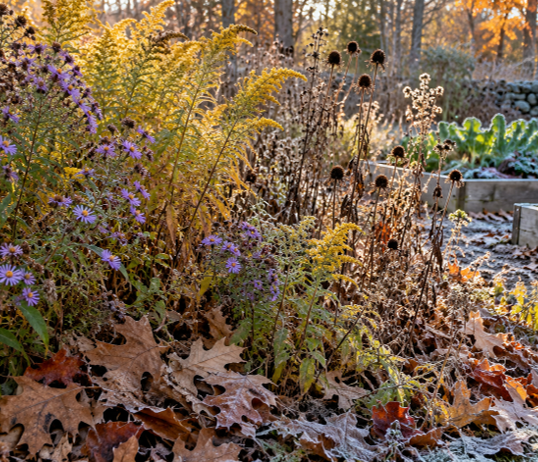
Native bees and other beneficial insects can overwinter in stems, leaf litter, soil, and other seemingly "messy" places. Birds also use standing seedheads as winter food.
That means we don't have to choose between gardening and wildlife habitat. We can simply manage different areas differently.
Clean where sanitation matters. Protect soil where it is exposed. Leave habitat where it can safely remain.
If you plant cereal rye, make a spring plan now
Cereal rye deserves a special note because it can grow surprisingly quickly once spring arrives.
Begin checking it around mid-April. When plants are roughly 6–10 inches tall, and before they begin significant stem elongation, it's time to terminate the crop.
For a home garden, that can mean cutting it down and shallowly turning or undercutting the roots, or covering the cut plants with a tarp to stop regrowth. The important part is not allowing rye to continue growing until it becomes large and begins producing seedheads.
After termination, give the bed a little time before planting. A useful rule of thumb is roughly two weeks before setting out transplants and closer to three or four weeks before sowing small-seeded crops directly into the bed.
That waiting period is one reason it's worth thinking about spring while you're standing in the garden in October.
A winter garden doesn't have to look empty
Putting a garden to bed isn't really about shutting it down.
Under a blanket of leaves, plant roots, snow, or a living cover crop, the soil remains a remarkably active place. Organic matter continues to break down whenever conditions allow. Soil organisms persist. Nutrients cycle. And the structure we worked so hard to build during the growing season can either be protected—or left exposed to months of New England weather.
A good fall cleanup, then, is less about making everything look neat and more about leaving the garden in a condition that makes sense.
Remove what could cause problems. Keep the soil covered. Leave useful habitat where you can. And if you plant something that will wake up before you do in spring—especially cereal rye—write yourself a reminder.
The garden may look quiet in January, but it certainly isn't doing nothing.
