

A 30-Year Tradition Takes Root: Tulip Trees for Russell Street Third Graders
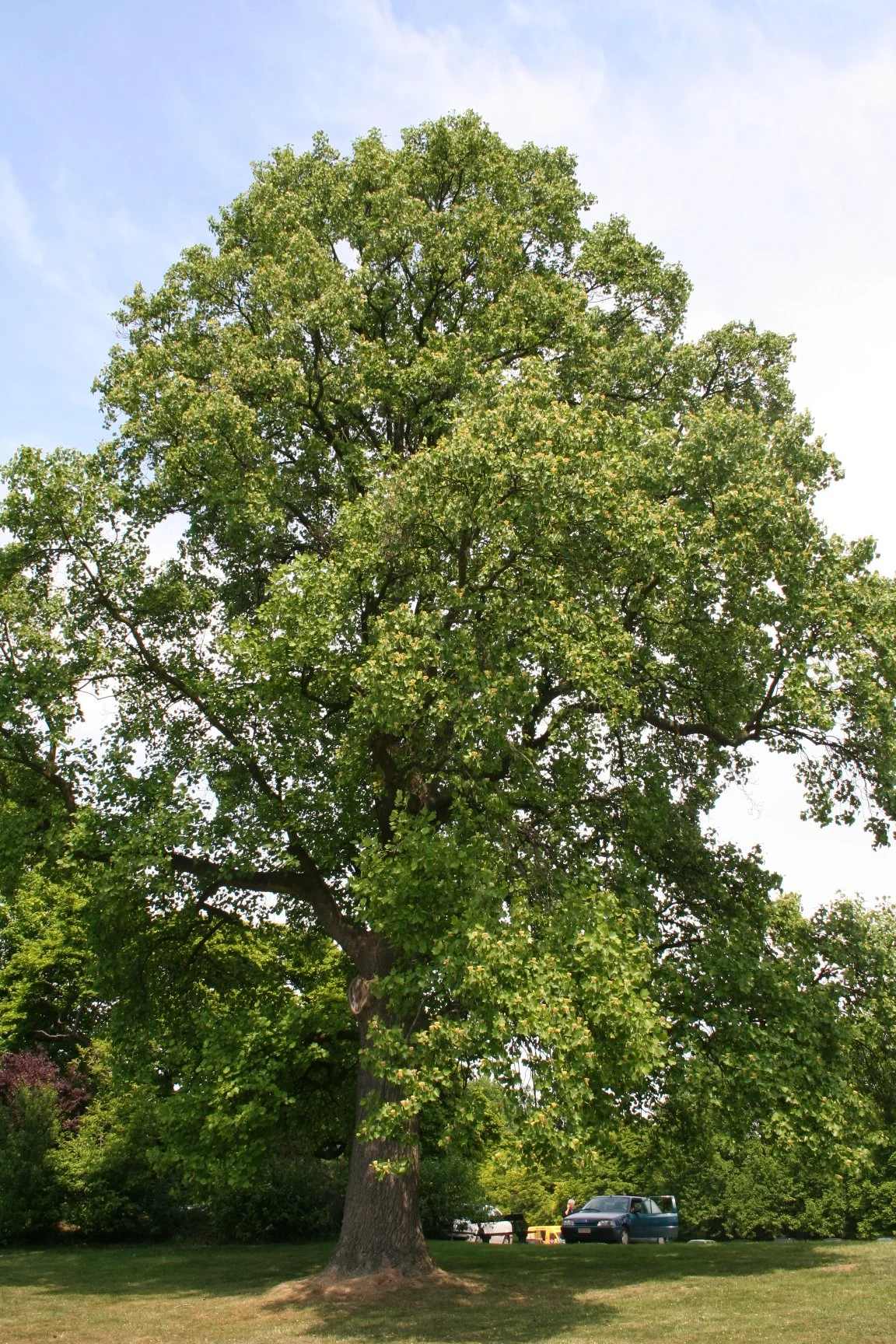
A mature tulip tree (Liriodendron tulipifera). Photo by Jean-Pol GRANDMONT, CC BY 3.0, via Wikimedia Commons.
For more than three decades, every third grader at Russell Street Elementary School has gone home on Arbor Day with a small gift that has the potential to outlive the rest of their belongings by a couple of centuries: a young tulip tree of their very own. This year, that tradition continues as the Littleton Country Gardeners and the Littleton Shade Tree Committee once again team up to put a native sapling into the hands of every third grade student on Monday, April 27, 2026.
It is one of our favorite days of the year — and one of Littleton's quietest, most enduring acts of community planting.
Why a Tulip Tree?
The tulip tree (Liriodendron tulipifera), sometimes called the lily tree, is one of the largest trees native to North America. Once established, it grows quickly, eventually reaching up to 100 feet tall with a trunk four to six feet across. It is one of the very first trees to leaf out in the spring, and the leaves themselves are a botanical wink: each one is shaped like a tulip.
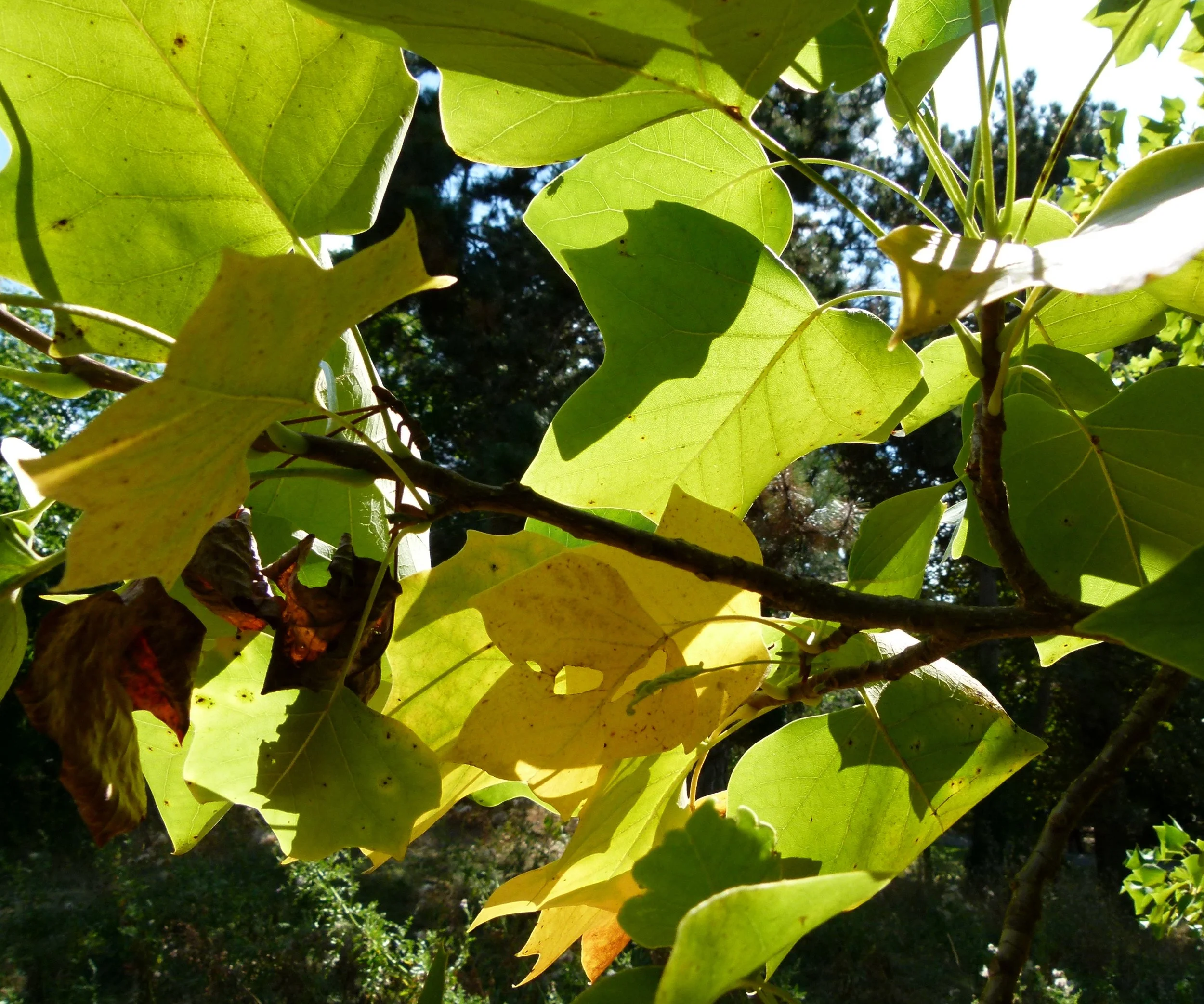
The leaves are unmistakable — each one shaped like a small tulip. Photo by Dinkum, public domain (CC0), via Wikimedia Commons.
In May, mature trees produce large, cup-shaped flowers — yellow brushed with orange — that look more like a magnolia bloom than a typical New England wildflower. Patience is part of the deal: a tulip tree can take twelve to twenty years to flower for the first time, and even then, the blossoms tend to open at the very top of the canopy where they are easy to miss. The reward for those willing to look up is considerable. The flowers produce abundant nectar with a sweet, honey-like scent that pulls in bees, butterflies, and especially hummingbirds.
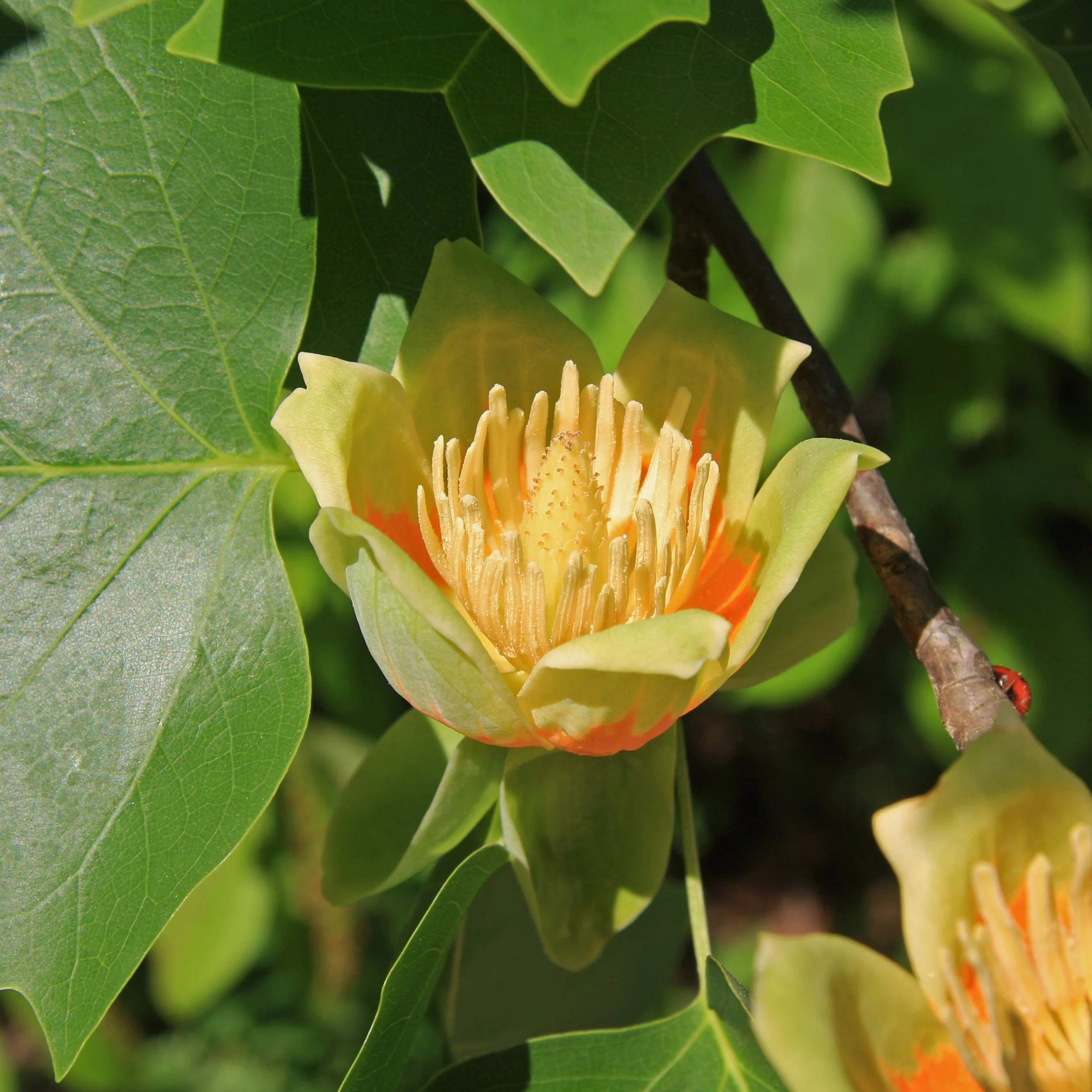
The cup-shaped May flower — yellow-green with a bright orange flare at the base. Photo by Dcrjsr, CC BY 3.0, via Wikimedia Commons.
In autumn, the leaves turn a glowing yellow, and the tree drops winged seeds called samaras that spin to the ground like tiny helicopters. Squirrels, birds, and other wildlife rely on them for food.
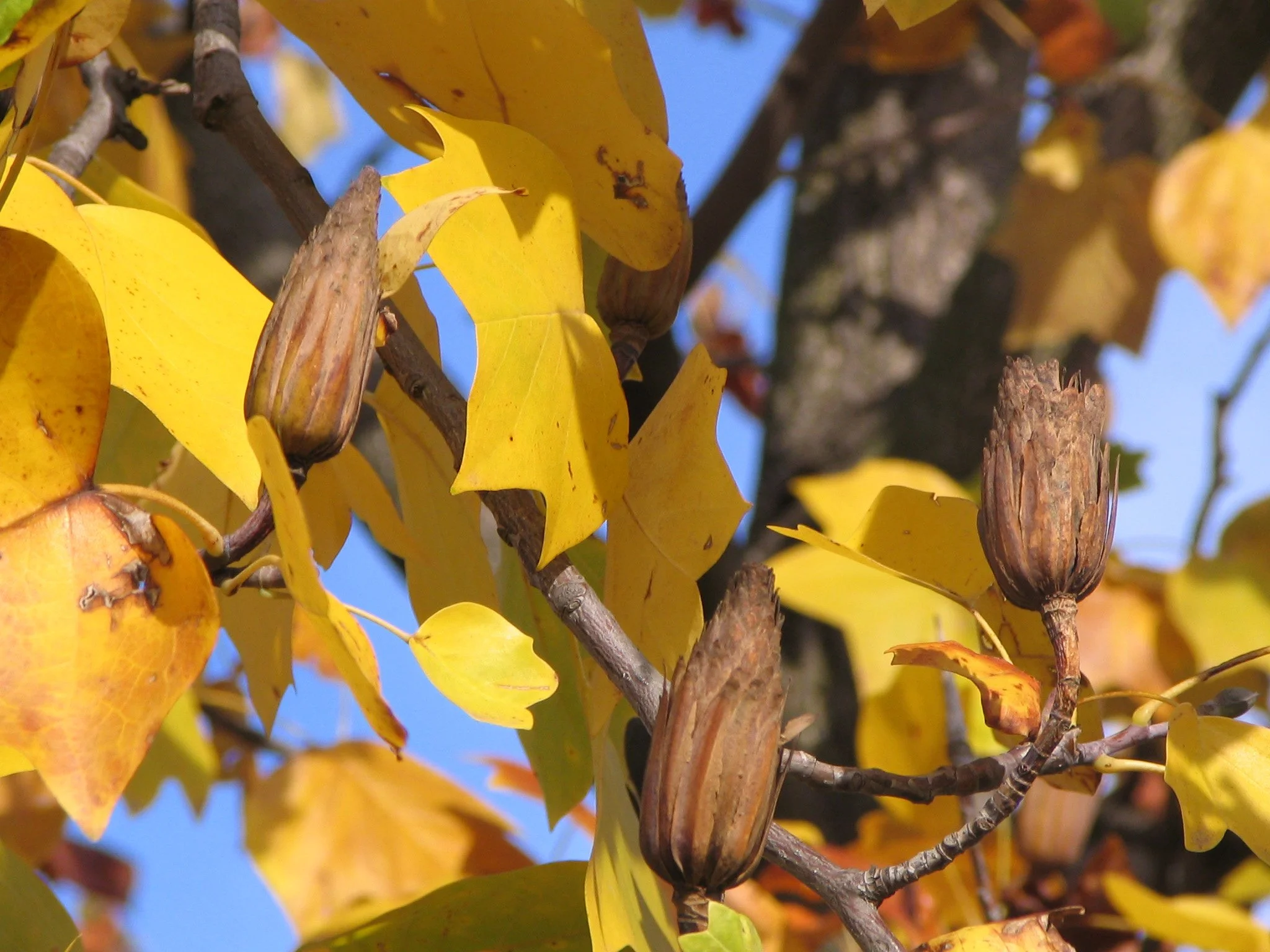
The wood is strong, light, and historically prized for lumber and furniture; Native Americans used tulip trees to build canoes. With proper conditions, an individual tree can live to be 200 to 300 years old.
A Tree Worth Planting Well
Because tulip trees grow so large, they are not a tree to tuck in next to the house. We recommend planting 15 to 30 feet away from buildings, and away from busy roadways — tulip trees are sensitive to ozone. Give one the right spot, however, and it will reward the effort. Tulip trees are unusually effective at sequestering carbon, making each sapling a small but meaningful piece of climate work in the ground.
That is part of what makes this giveaway so special. Every child who carries one home is taking part in a quiet experiment in patience and stewardship: the tree they plant this spring may still be standing — flowering, sheltering, and pulling carbon from the air — when their great-great-grandchildren are alive.
A Cooperative Tradition
The Arbor Day Tulip Tree Give-Away is a cooperative project of the Littleton Shade Tree Committee and the Littleton Country Gardeners, and it has been a beloved fixture of the third grade experience at Russell Street Elementary for over thirty years. Each spring, volunteers prepare the saplings, write up planting instructions for families, and meet the students with trees in hand.
Trees come with simple care instructions tucked in alongside them, so families can give their sapling the best possible start. We ask only that recipients keep the roots damp, choose a sunny spot with room to grow, and check in on it through that important first year.
If you'd like to learn more about the Littleton Country Gardeners, support our community planting work, or join us at an upcoming meeting, visit our [Events page] or [Contact us]. We'd love to grow this tradition with you.
The Littleton Country Gardeners is a volunteer gardening club based in Littleton, Massachusetts, dedicated to horticultural education, civic beautification, and community partnership.
Image Credits
All photos sourced from Wikimedia Commons under licenses that permit reuse with attribution:
Mature tulip tree — Jean-Pol GRANDMONT, CC BY 3.0
Tulip-shaped leaves — Dinkum, CC0 / Public Domain
Flower close-up — Dcrjsr, CC BY 3.0
Fall foliage and seed clusters — Mihail Grbić, CC BY-SA 3.0
